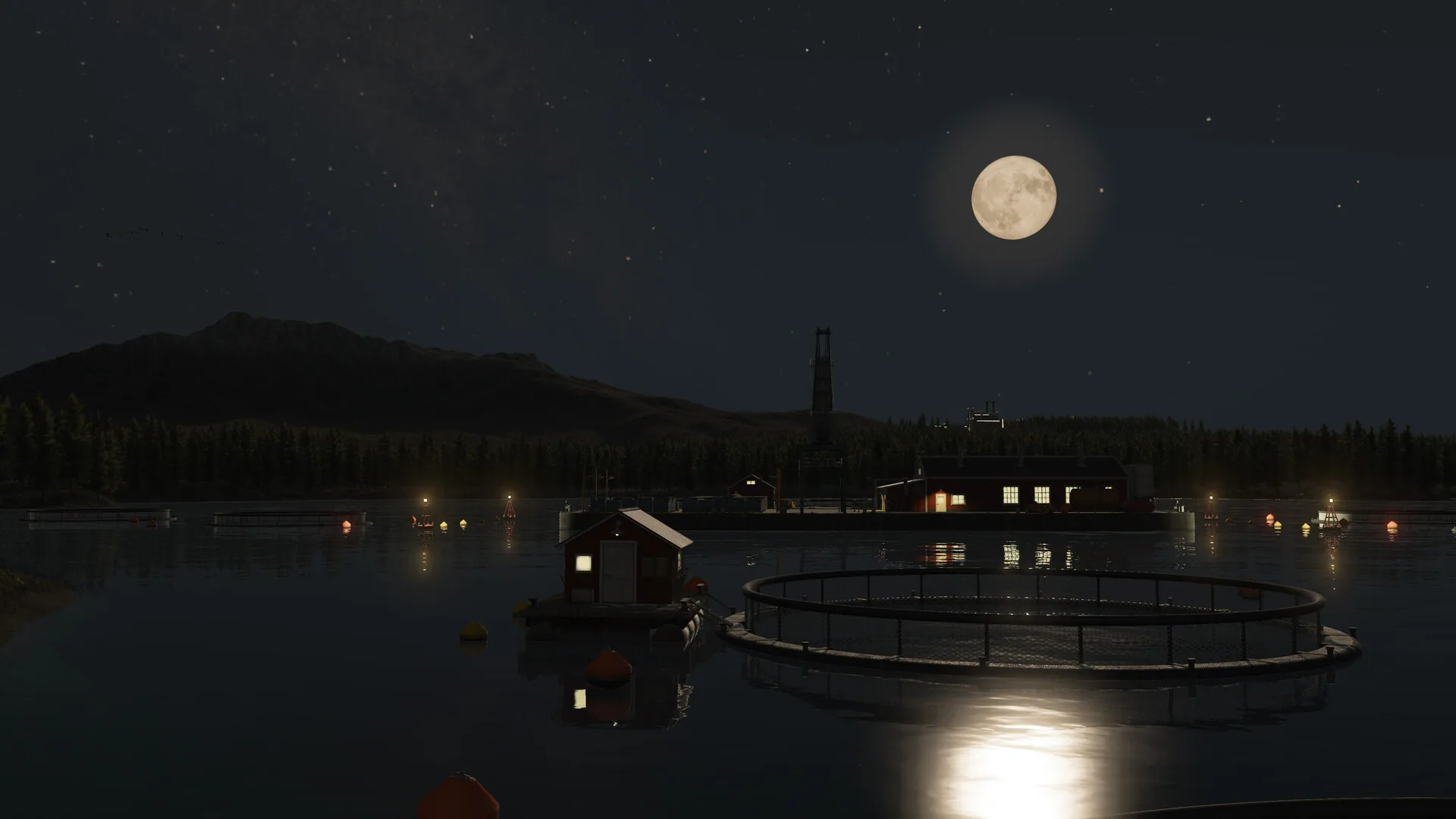
Moonlit fish-farm cages on a subarctic lake — the new climate.
Transport Fever 3 climate zones are temperate, desert, tropical and a new subarctic region. Node-based maps can mix those biomes on one layout, with weather and a full day-night cycle. The 1900 to 2030s timeline sits on top of that geography: the same map can grow from steam to helicopters without changing climate mid-save.
Subarctic is the series addition, including swamps in official examples. Deluxe animals are placed by climate: boar family in temperate country, bison on dry grassland, Komodo dragon in the tropics, orca in subarctic water. The pre-order Asian elephant sits with tropical maps. The generator still does not publish a seed list or a per-biome industry table.
Temperate forests, desert plains, tropical islands and the new subarctic region including swamps can share one node-based save. A liquid tanker may leave a desert platform and unload next to a temperate mill without changing climate mid-route. Weather and the day-night clock keep running across that cut.
Environment First Look
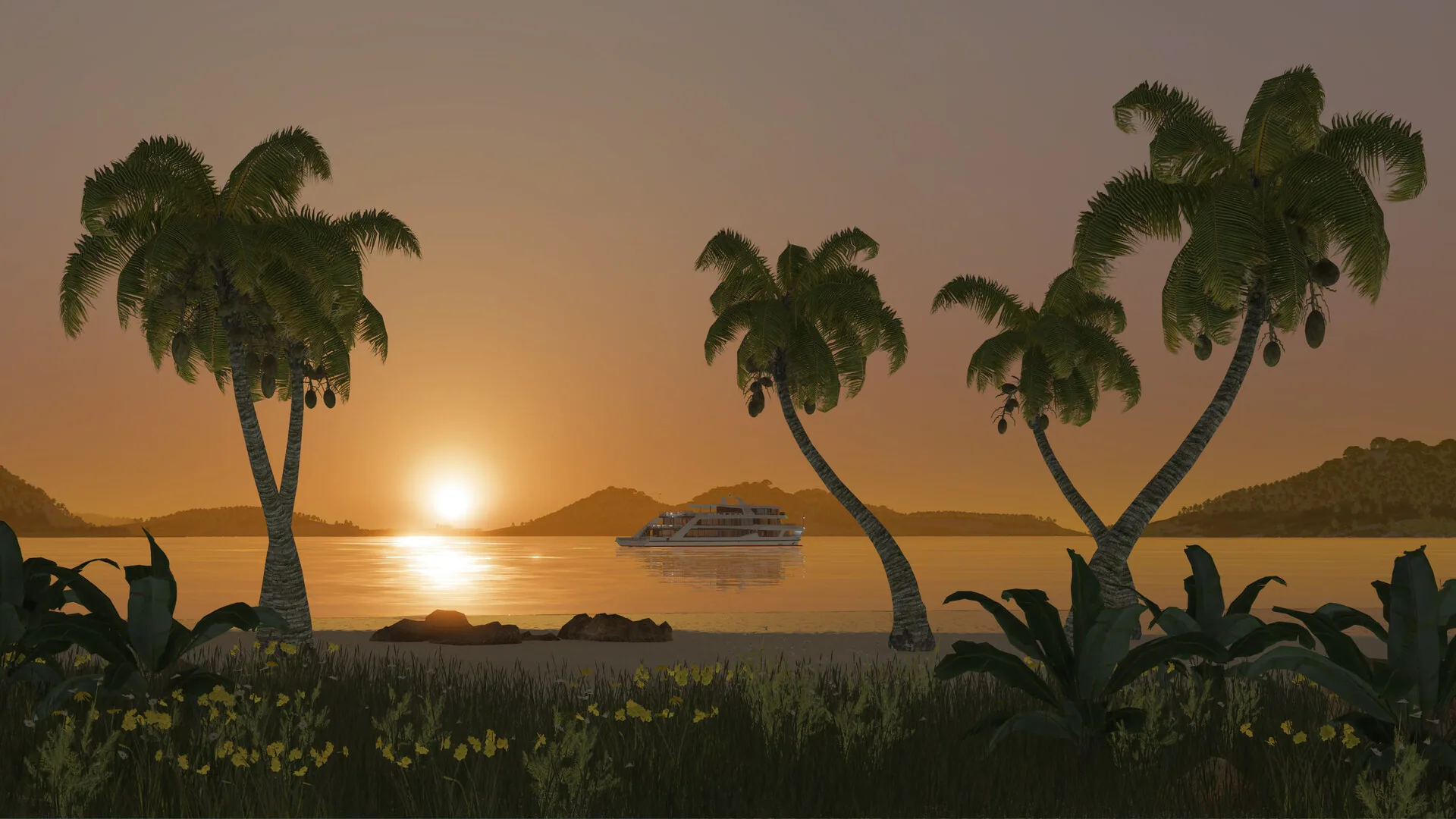
The environment First Look is the official film for mixed biomes, weather and day-night. Click the facade for youtube-nocookie. Pair it with the two stills on the climate stills: subarctic cages and a tropical sunset ship.
Temperate, desert, tropical, subarctic
Temperate is valleys and forests, the default European-looking countryside in the launch stills. Desert is plains and red rock, with oil terminals and quarry plants in the screenshot set. Tropical is islands, palms and beachfront cities. Subarctic is the new region: colder water, swamps, and the moonlit fish cages used as the lead still.
You can mix those biomes on one node-based map. That is the generator pitch: a desert oil deck and a temperate town are allowed to share a save. The official FAQ does not give a maximum node count or a climate-percentage slider label, so no node-count figure is listed.
Living-world rules apply in every climate. Citizens have homes, jobs and places to go. Weather and day-night are listed features, which is why night station stills and sunset platforms appear in the Steam set. They are not filters you apply in a photo mode; they are the clock the town runs on.
Climate
Official examples
Temperate
Valleys, forests; Deluxe boar family
Desert
Desert plains; Deluxe bison on dry grassland
Tropical
Tropical islands; Asian elephant pre-order; Deluxe Komodo dragon
Subarctic
New region; swamps; Deluxe orca
How mixed-biome maps change routing
A mixed map is a cargo problem. Liquid oil from a desert platform may have to cross temperate housing to reach a tropical port. Noise and pollution sliders still apply; a desert flare stack next to a temperate suburb is a reputation issue, not just a pretty contrast. Cargo still waits at origin, so the climate mix does not auto-route oil to the nearest tank.
Offshore jobs follow the water you actually generated. Subarctic lakes take fish cages. Tropical coasts take the passenger-ship still. Oil platforms want sea room for tankers and a helicopter pad. The generator will not automatically place the matching industry; demand still unlocks chains as towns grow.
Handcrafted Deluxe maps are three extra layouts, not a fifth climate. Use the editor if the node generator will not give you the swamp-to-desert cut you want. Sharing that file is a mod.io job, identical on PC and consoles. Weather and the day-night clock still run on those handmade maps, so a night run through tropical palms is a lighting change, not a new biome.
A passenger ship at tropical sunset between leaning palms.
Animals, eras and what is not published
Deluxe animals are flavour tied to climate, not a husbandry minigame in Urban Games. The pre-order elephant is tropical. Do not expect a breeding loop or a zoo industry unless Urban Games later says so. They sit on the map as living-world dressing next to the cargo jobs, not as a fifth handling class.
The 1900–2030s era spread is global, not climate-locked. Helicopters can overfly a temperate lake in 2030 in the same way steam can work a desert siding in 1910. Vehicle availability is still unpublished per year; climate does not substitute for a year table.
No official map-size table, no rainfall numbers, no per-biome cargo list. The four names Urban Games printed are temperate, desert, tropical and subarctic. Deluxe animals sit on those four names: boar, bison, Komodo dragon and orca, plus the pre-order elephant on tropical maps. Node-based mixing means a tanker may leave a desert platform and unload beside a temperate mill on the same save. Weather and the day-night clock keep running across that cut, so night noise still hits reputation. Subarctic swamps and tropical islands can share a coastline on one generated map, which is why a tanker route may leave warm water and arrive under aurora lighting.
Frequently asked questions
Can one map include desert and subarctic at the same time?
Yes. The official FAQ describes four climate zones and node-based maps that can mix biomes. You are not locked to a single climate per save. Exact generator controls (percentages, node limits) are not published, so plan for mixed routing rather than for a documented slider value.
Is subarctic only in Deluxe?
No. Subarctic is listed as a base-game climate, the new region in the four-zone set. Deluxe adds an orca as a climate-placed animal, the same way Deluxe places bison on dry grassland. The climate itself is not a Deluxe toggle.